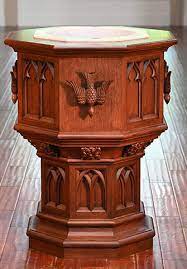
Lent is a Journey. Our journey of faith circles the baptismal font, and Lutherans LOVE to “liturgize” these events!
One of the liturgies of thanksgiving for baptism declares “we remember the waters of Jesus – baptized in the Jordan River, calming the Sea of Galilee, drinking from Jacob’s well, healing at the pool of Bethesda, washing the feet of his disciples”. We will visit some of these places this week.
On the last day of the festival, the great day, while Jesus was standing there, he cried out, “Let anyone who is thirsty come to me” (John 7:37)
A prayer: God of flowing waters, fill us with longing for you as one in the desert longs for quenching water. And satisfied let your love be an ever flowing stream through us to a thirsty world. Amen
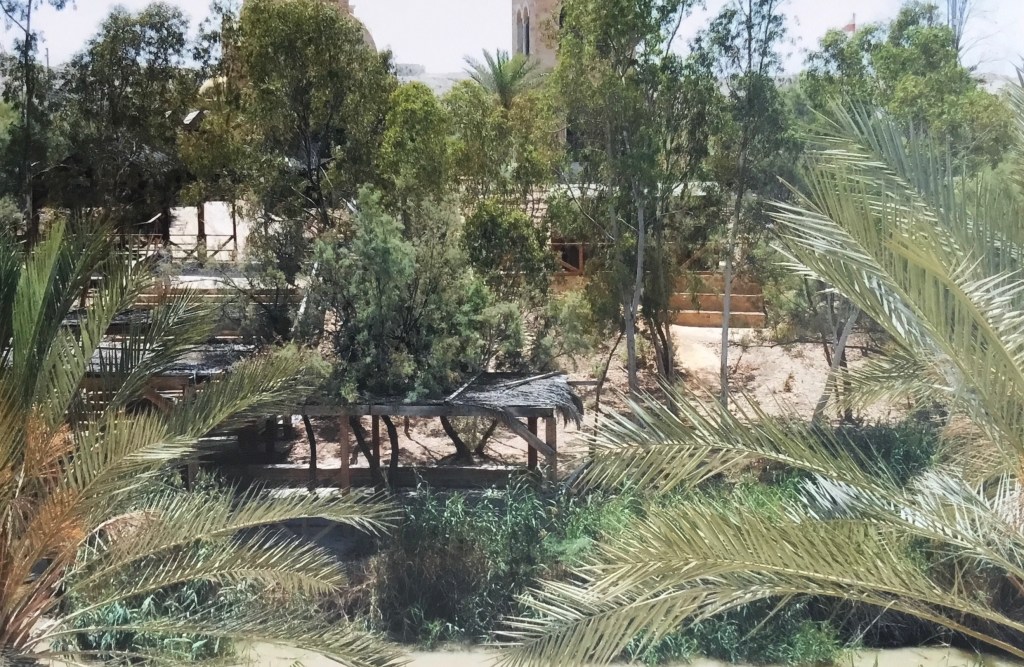
We arrive at the Jordan River and the first sight is breathtaking – branches of palm trees waving in a lovely breeze on a very hot day. A steep pathway leads to individual areas for groups to gather and celebrate baptism or baptism renewal.
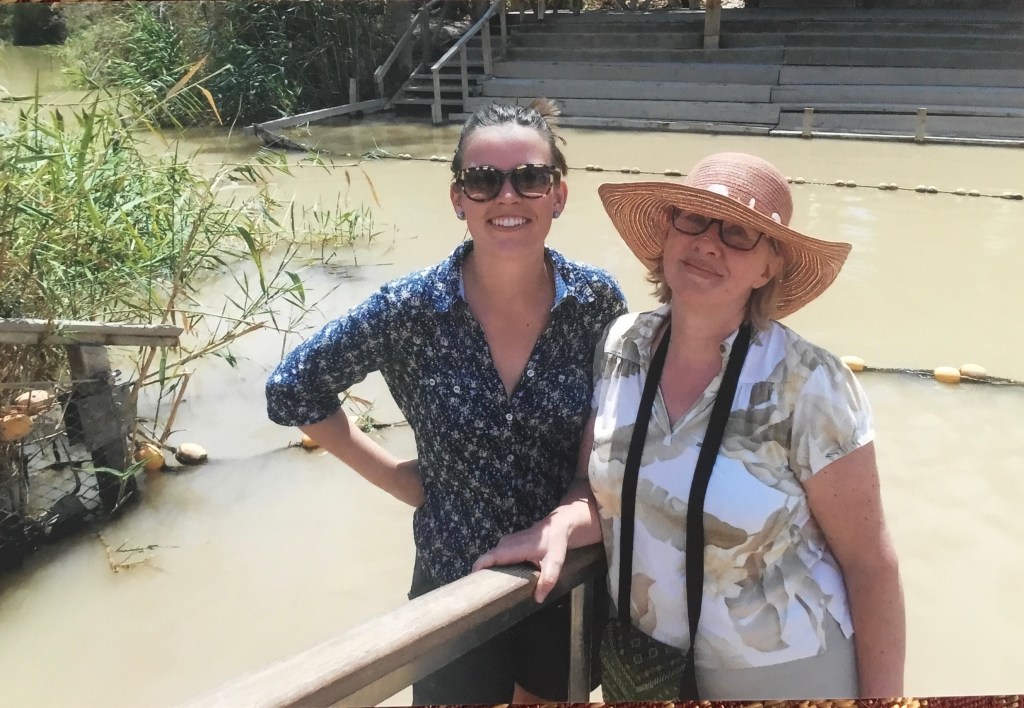
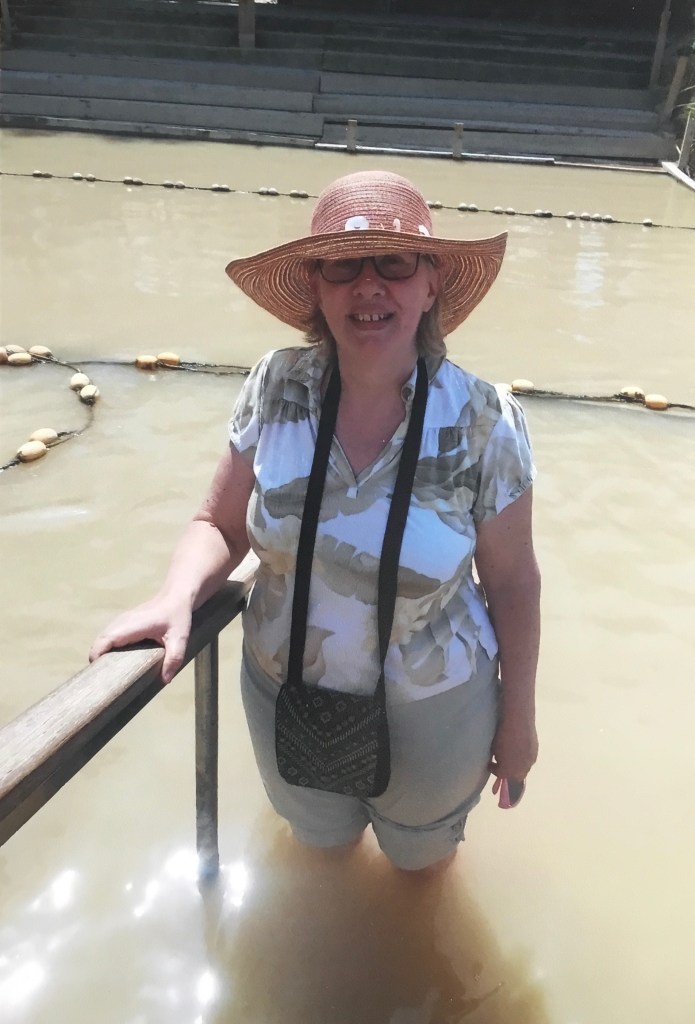
A few of us removed our shoes and moved into the water. I was thankful for wooden steps which continued under water, because I’m squeamish about stepping on the bottom of lakes or rivers. The water was a clay colour, definitely not clear. It was not cold, nor did it have a strong current.
This is our opportunity to renew our baptism promises while standing (on a step) in the Jordan River. It was meaningful to acknowledge our belief that Jesus is the Son of God. Doing that in the place where those words were first said was powerful.
Biblical references to Water:
God claims us through water of baptism – And when Jesus had been baptized, just as he came up from the water, suddenly the heavens were opened to him and he saw God’s Spirit descending like a dove and alighting on him. 17 And a voice from the heavens said, “This is my Son, the Beloved,[a] with whom I am well pleased.” (Matthew 3:16-17; Mark 1:10-11; Luke 3:21-22;)
Jesus revealed God’s unconditional love through water –At Jacob’s well Jesus speaks to a Samaritan woman. It was an unusual act for a man to speak directly with a woman, especially a woman who was considered to be a foreigner: Jesus answered her, “If you knew the gift of God and who it is that is saying to you, ‘Give me a drink,’ you would have asked him, and he would have given you living water.” (John 4:10)
Through water God’s love is given to everyone – The story continues with marvelous developments: Many Samaritans from that city believed in him because of the woman’s testimony, “He told me everything I have ever done.” (John 4:11)
Reflection:
Water is vital to our health. It plays a key role in all of our body’s functions, including bringing nutrients to cells, getting rid of wastes, protecting joints and organs, and maintaining body temperature. Does thinking of Jesus as necessary as the water we need to live and grow and to maintain our temperature/attitude change the importance we give to having Jesus part of our every day?

Prayer for our journey: God of refreshing waters, cleanse us, calm us, heal us and make us new in your loving grace. Remove the burden of our mistakes; calm us from fear of things that are not familiar to us; satisfy our thirst to be held in your love. Heal the hurts we are not able to release on our own. We open our hands to you in trust. Amen
Pause in your devotions now if you wish, or continue on to see more waters of Jesus.
More about Waters of Jesus
The Jordan River is a unique waterway – water flows into the Sea of Galilee and the Jordan River basin from rain runoff flowing down from the surrounding hills. This is why the water is clay coloured and not clear. It carries sediment and soil from the land. The water flows through the valley and to the Dead Sea.
It is a unique water system which does not flow into the ocean. (If you are a word collector, it is called an Endorheic waterway.)
The minerals from the land are eventually deposited in the Dead Sea as the water evaporates. Hundreds of centuries of evaporation has increased the salt content of the Dead Sea. We were able to experience the weird buoyancy of that water.
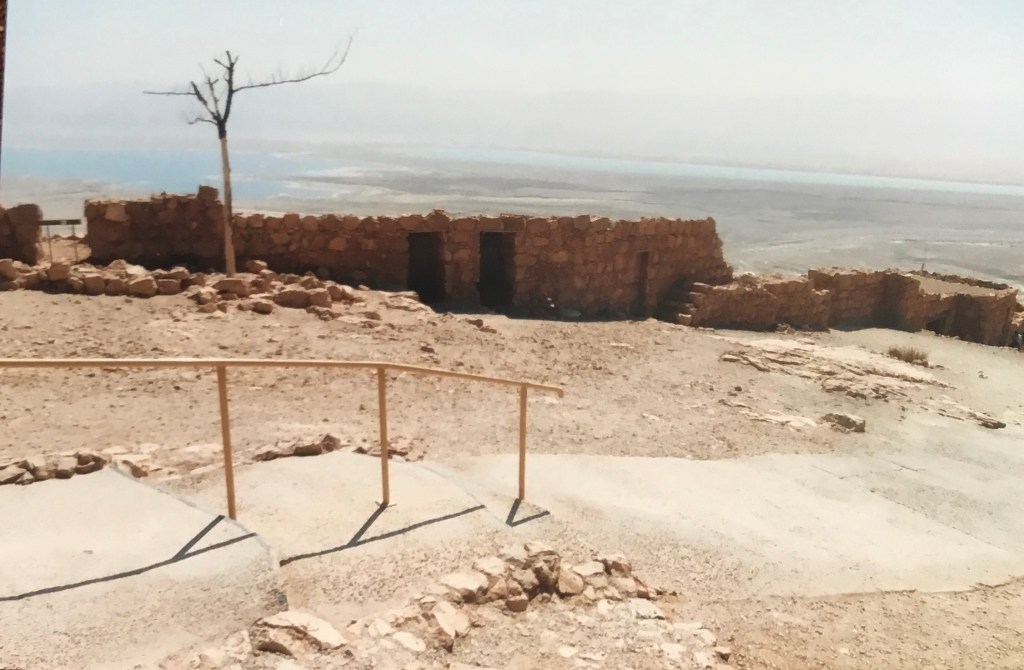
The photo below is the 2017 view of The Dead Sea from the mountain top fortress of Masada. The Dead Sea is seen on the horizon.
Jacob’s well:
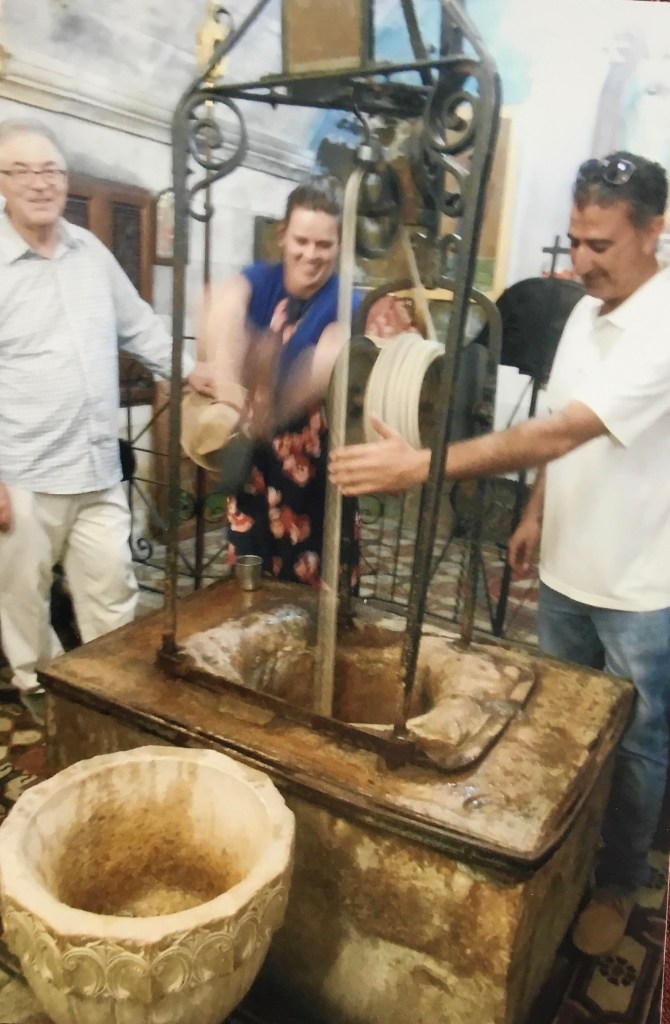
Located in the land of Shechem, on what today is the West Bank. This is known as the place where Jesus encountered the Samaritan woman and asked her for a drink of water. He then told her everything she wanted to hide about her life.
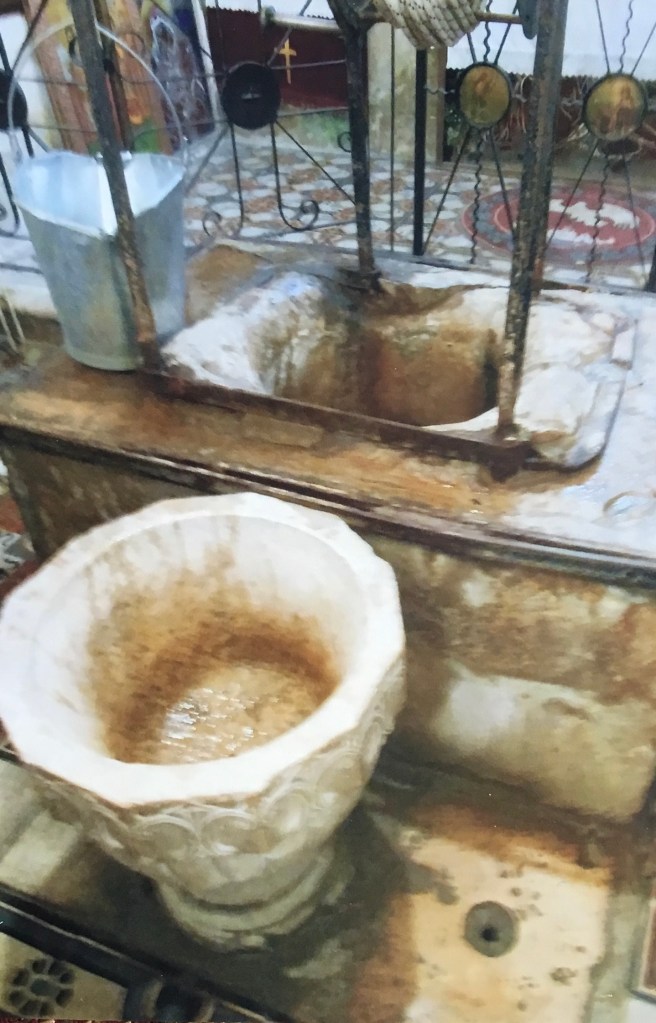
We sometimes pretend that we are different than we truly are, but Jesus knows us to the depths of our joy and despair. There is no need for pretenses. This is an endless source of truth, just as the well, -dug in the time of Jacob- is an endless source of clean water –still to this day.
The well is protected in a Greek Orthodox Convent, and guarded by Greek Orthodox priests. When we visited, one of the priests told us that his predecessor had been killed on the job when bandits came in and shot him.
The Bethesda pool:
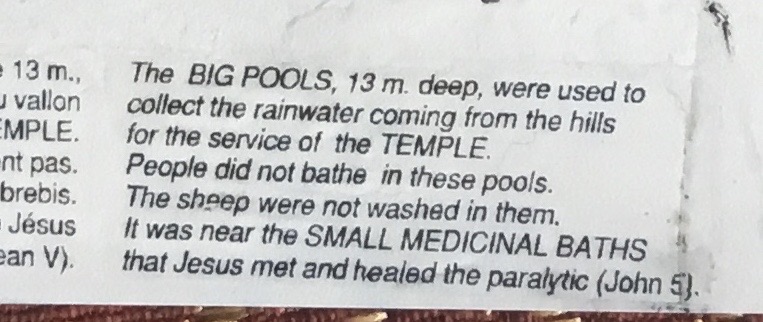
The pool at Bethesda is recorded in scripture as healing water. The first person in the pool after “the angels stirred the water” was healed. Jesus saw a man who had been there for 38 years who could not get into the pool without help. Jesus compassion healed the man to the protest of religious leaders who chastised Jesus for breaking the Sabbath. (John 5)
When we visited the pool, we saw an archeological site – ruins and the barest outline of anything resembling the story in the gospel of John (5:2) We stood in the full sun, and we could appreciate that the people waiting for healing had shaded, safe places – porticoes – to sit while they waited.

It was common to build on existing structures. Earthquakes and waring destruction leveled many historical sites, and new buildings were erected on those spaces. That is what happened around the pool of Bethesda. In archaeological digs conducted in the 19th century a large tank was discovered, which was thought to be the Pool of Bethesda.
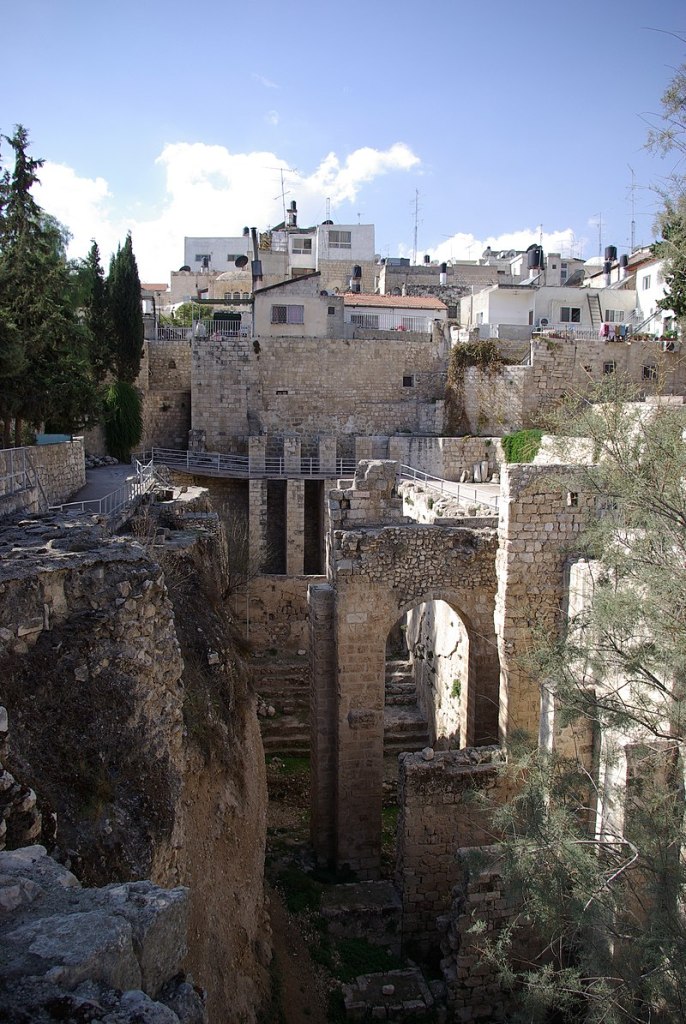
Further archaeological excavation in the area, in 1964, uncovered the remains of the Byzantine and Crusader churches, Hadrian’s Temple of Asclepius and Serapis, the small healing pools, the second of the two large pools, and the dam between them. It was discovered that the Byzantine church had been built in the very heart of Hadrian’s temple and contained the healing pools
To this day, there is no explanation of what ‘stirred’ the waters and why people were healed.
This map shows the archeological excavation of the pool area. the description at the bottom of the map is enlarged for easier reading.

We hear Jesus say, “I will give you living water and you will never thirst” and we know that we are loved just as God made us: skin colour, gender and sexual orientation, mistakes and successes, all are known.
Jesus interacts with water in many places and ways.
His first miracle used water and turned it to wine to teach us of God’s abundant generosity.
His final act before his passion and crucifixion used water to show his friends how to humbly serve one another by simply washing their feet.
As we journey through Lent we give thanks for the living water of God’s grace which frees us from the things we want to hide, and allows our lives to unfold in the fullest and most meaningful way as God intended. Praise be to God.
Let us pray, Create in me a clean heart o God and renew a right spirit within me, a spirit of knowledge of your presence, and the joy of your loving grace, flowing like water through our lives and the lives of all who we witness to. Amen
 finding Grace in Surprising Ways
Thank you. Dorothy
LikeLiked by 1 person