Lent is a Journey – from the wilderness to seeing how God touches our life.
A prayer for our journey: My Soul proclaims your greatness O Lord. We rejoice in your love for all people and creation. Be with us as we journey. Open our eyes and hearts to your presence in our life. Amen
Today we visit The Mount of Olives and sit under the ancient olive trees in the garden of Gethsemane.
My hope is to share with you the peace of this place where Jesus prayed, and yet, Jesus was deeply troubled that night. The world remains a place where people chose evil and greed, and seek power, acting without compassion.
I wish to share with you the care and time that it takes for Olive trees to grow, and produce the fine oil which Mary (no last name) used to honour and anoint Jesus. Judas criticised her action, but Jesus spoke to him. Perhaps that strengthened the resolve of Judas to harm Jesus. He later regretted that. The peace of God is pure. The peace of the world is fleeting.
The Mount of Olives is one of the oldest Biblical cultivations of olive groves, and some still remain in the Garden of Gethsemane. We were able to walk in the Garden.

Our tour leader arranged for us to spend an hour in the Garden of Gethsemane and we instinctively separated to walk alone. It seemed the right way to be there. Of course, the grounds are looked after very lovingly, and perhaps it looked different than when Jesus found retreat there. In this time, the peace of the space was perfect. It did not seem important to take pictures during our time there, so I only have a few. When I say or hear the words “The peace which passes understanding” I think of this place, and immediately my stress and anxiety lowers. That same feeling can be found in places closer to home too, especially if one’s mind holds the words of God’s peace. Where do you retreat when you need space to sit and just breathe?
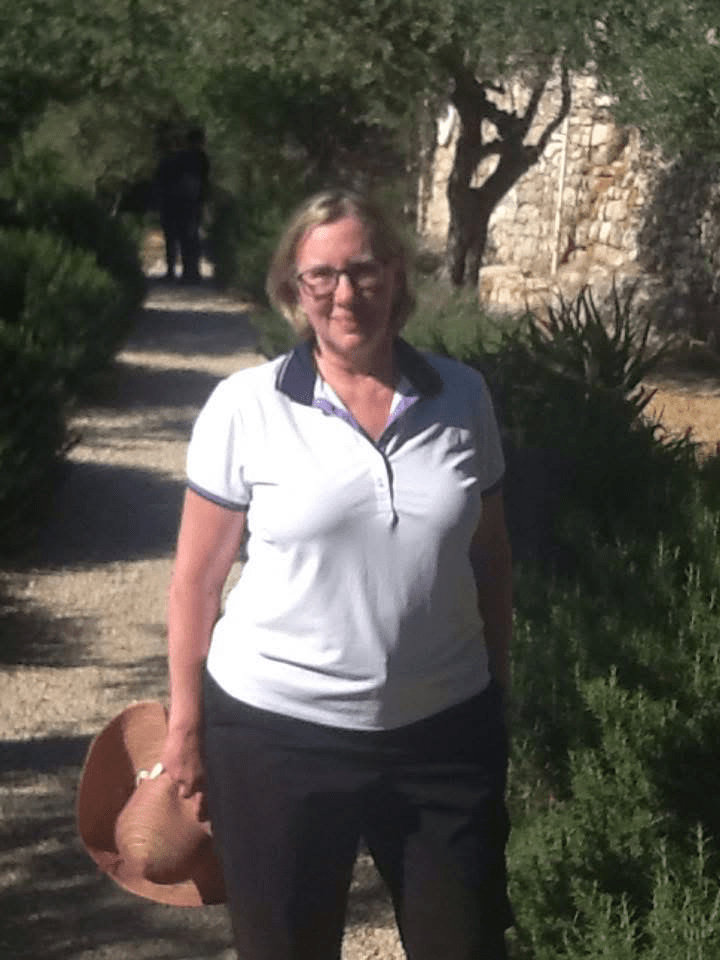
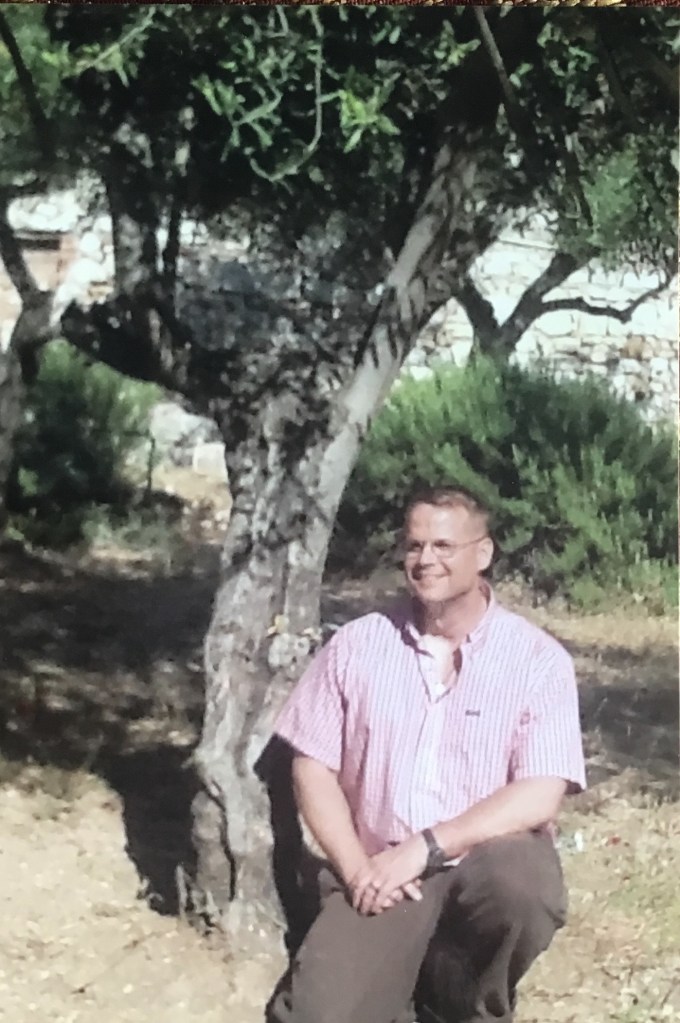
These are a few of my photos from the garden- myself in the first one and Pastor Jason in the second.
Biblical references to the Mount of Olives:
Jesus shares a meal with his disciples. Bread and wine is offered as the body and blood of Jesus. They sing the Passover hymn and go out to the Mount of Olives. (Matthew 26:26-31)
Before he is betrayed, Jesus takes three disciples with him as he goes to pray, because he is so very anguished. The peaceful garden lulls the disciples to sleep. (Matthew 26:36-46). When we give our worries and burdens to God, we too are able to sleep.
The events of Jesus’ arrest occur at the Mount of Olives and are recorded in three of the Gospels: (Matthew 26; Mark 11-14; Luke 19-22;)
John records the account of the woman accused of Adultery as happening on the Mount of Olives – (John 8) a story where the law of society is used to shame those who are already vulnerable. We do that – when we say “those people” or “someone should…” suggesting that we know what should happen and are therefore superior. (“shame on them” is the unspoken message) The way of Christ is not to shame, but to lift up those who are vulnerable or weak.

The Olive branch is a symbol of peace.
Reflection question or thought: We seek peace in our life, we pray for peace and sometimes we do actually know the joy of living in peace. Too often, however, we find ourselves lacking in compassion, criticizing like Judas- taking the moral high ground, or being complacent about loving Jesus, maybe even falling asleep/taking Jesus for granted – just as the disciples did.
These traits hurt our heart when we think about them afterwards, and that is good. There is hope for us. These are the things that the refining fire of God will purify, and our true generous and loving soul will be returned to God: Ashes to ashes, dust to dust.
Facing the truth about ourselves is hard. Facing the grace of God who loves, and forgives is hard too, it makes me weep because I deserve nothing. God forgives us and holds us in love.
Pause here with a prayer for God to create in us a clean heart and to renew a right spirit within us.
Return to this devotion when and if you have time. Read about olive trees, and the significant sites on the Mount of Olives.

More about the Mount of Olives
Olive Groves: One of the oldest Biblical olive groves that covered the mountain slopes of the Judean Mountains still exists today. An olive tree does not produce fruit until it is at least 5 years old, but then it can produce for thousands of years if properly pruned and cared for.

Fruit grows on new growth from the previous year, so pruning needs to protect those branches. The fruit ripens best on a tree that is pruned so “a bird can fly through the centre” – meaning that pruning allows the light to filter onto the fruit.
The trees are not able to survive cold temperatures, but the root system of an olive grove is very strong. Even after trees are cut down, sprouts come forth around the stump, and new trees grow.
The symbolism of the olive tree is ancient too – branches represent peace and abundance and are presented to deities and powerful people as signs of purification and blessing. The oil continues to be used in many religious ceremonies and is considered sacred. Olive production is a livelihood for many Palestinian families.

Church of All Nations
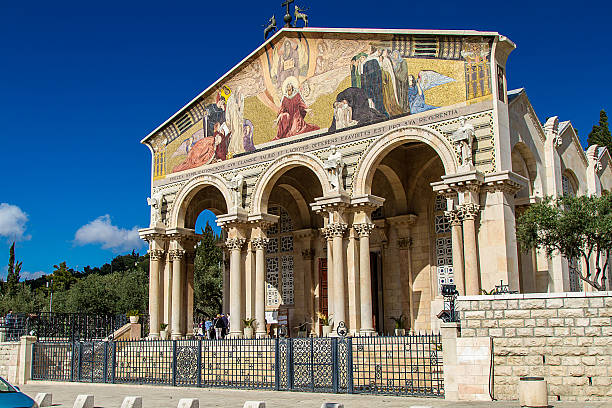
In addition to the Garden of Gethsemane, the Church of All Nations stands on the Mount of Olives. It is a Roman Catholic church located next to the Garden of Gethsemane. It is built over the rock Jesus is said to have prayed on in agony before he was betrayed by Judas. Often called the Church of Agony, it is built on the foundation of 2 earlier buildings: a 4th century Basilica and a 12th century Crusader chapel. The funds for the building came from 12 different countries, and the coat of arms of each country – including Canada- are displayed.
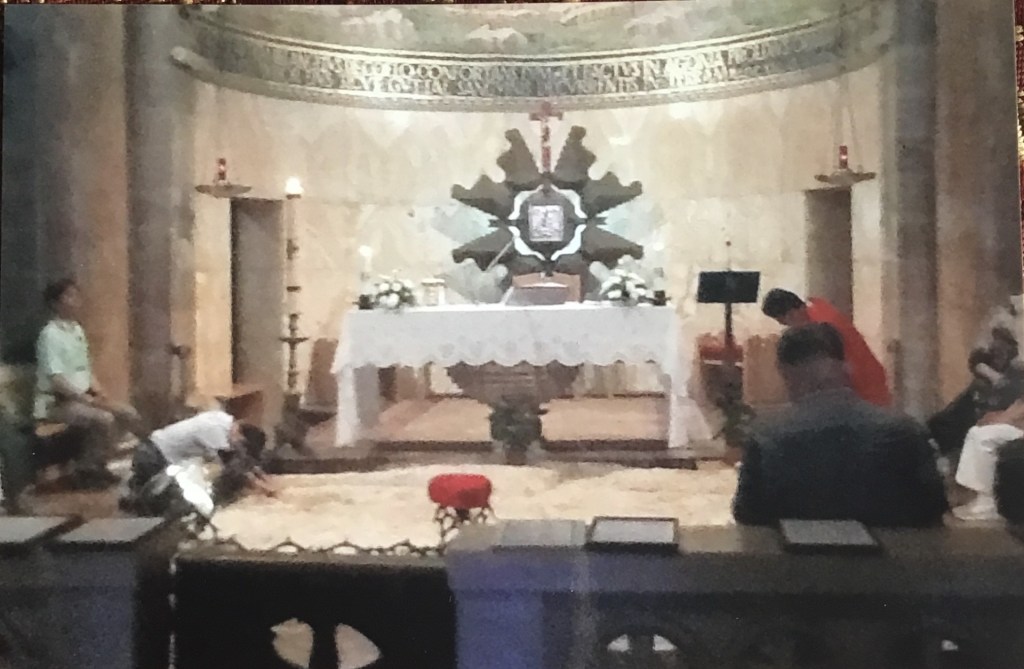
The Church encloses the rock of agony, seen in the picture below. The inscriptions above the columns at the front door are two scripture passages:
(Luke 22:43–44) “And being in agony he prayed more earnestly; and his sweat became like great drops of blood falling down to the ground.”
(Matthew 26:42b) “My Father, if this cup cannot pass unless I drink it, your will be done.”

The day we spent on the Mount of Olives ended with communion in a shaded area, reserved for our use. Sharing the bread and wine at the end of the day left us with profound gratitude for Jesus who met evil and death and conquered them. We went on our way, touched with deep faith for God’s promised redemption.


My prayer is for the love of Christ to live in us, changing the world and changing our lives. Amen
pastor Pam
 finding Grace in Surprising Ways