Our journey today looks at a city that is home to just about every nationality and culture in the world. It brings us face to face with a gentle look at our prejudices as we share food, practice our faith, and be neighbour to each other. Blessings as you engage in this work.
During Lent we read of Jesus turning his face toward Jerusalem to complete the task set before him. The Holy places in this city are remarkable in that they still exist. The most prominent site is the Temple in Jerusalem. We were able to climb the steps leading to the temple. This is the only places in Jerusalem that it is known for certain Jesus walked.

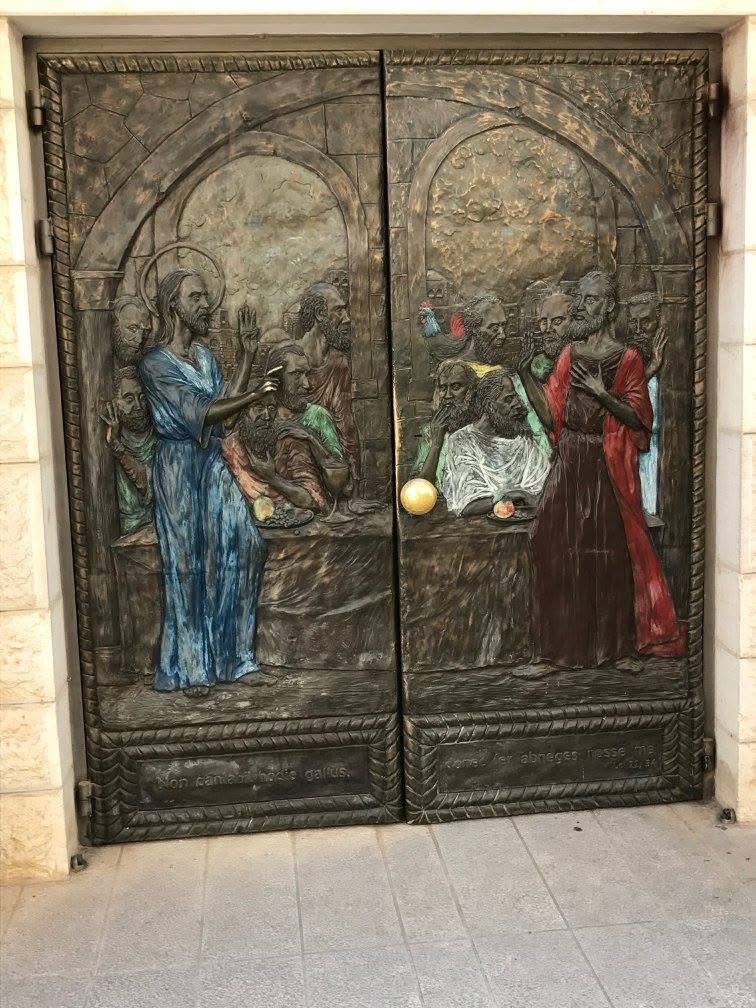
We also walked the way of sorrow, the Via Dolorosa which is the street it is believed that Jesus walked on the way to the cross. We saw places he might have placed his hand as he rested, where he fell, and where he met significant people face to face. Along the way, there is a large door carved with the image of Peter and the cock crowing. The Via Dolorosa ends at the Church of the Holy Sepulchre. It is an emotion filled walk.
Jerusalem is built between two hills in the Kedron Valley. We entered the city on foot, walking from the hilltop opposite Herod’s palace. Today, much of the hillside holds cemeteries, Muslim and Jewish, which are in turn torn apart, depending on who rules in that time period.
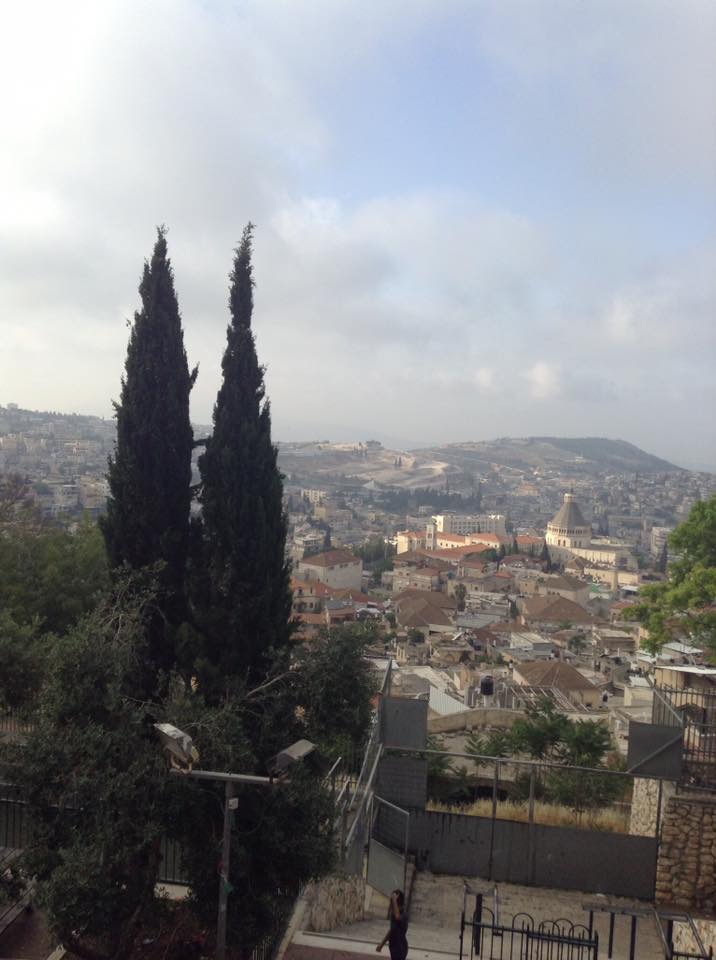
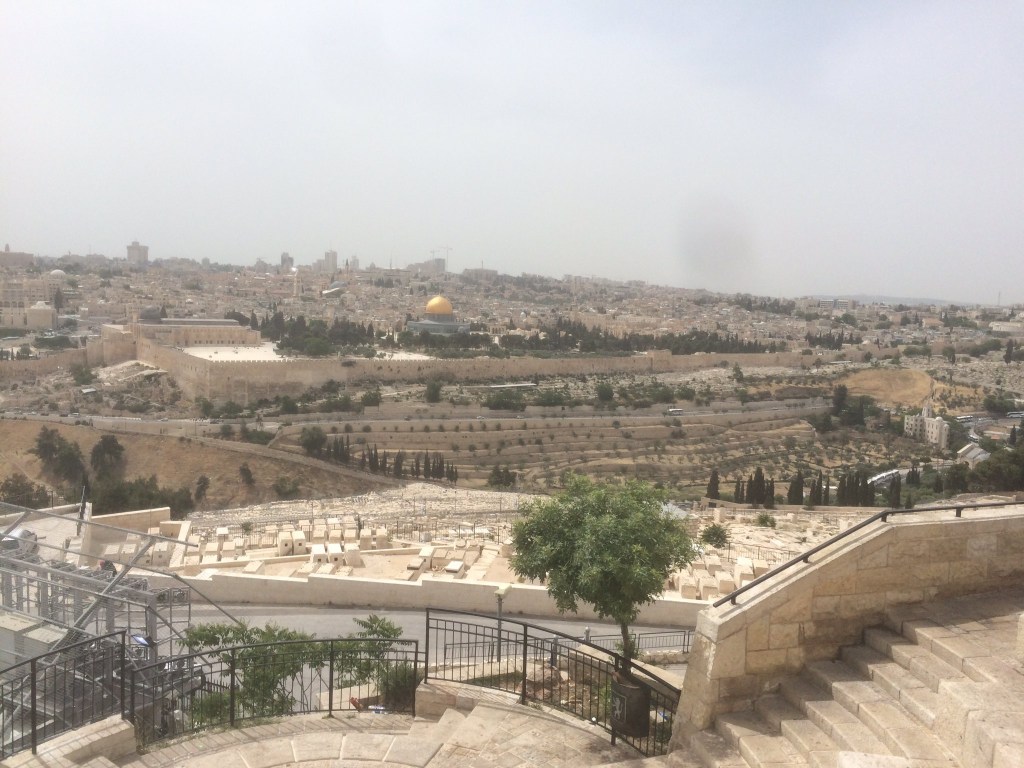
In Bible times, faithful people made a pilgrimage each year to the temple for Passover. This is why the city was so busy when Jesus and his disciples arrived before his crucifixion. The meal they shared in the upper room was the Passover meal. Today, much of the land is divided by barbed wire and concrete walls.

cemeteries on the hillside.


We work so hard at maintaining barriers, even as we know that Jesus came to tear down these divisions. We remember the words of Paul saying (Galatians 3:28) “There is no longer Jew or Greek, there is no longer slave or free, there is no longer male and female; for all of you are one in Christ Jesus.”
Pause in your devotions, and breathe in acceptance for those who have different traditions. Pray to be freed from prejudices. Place a token (a cross, a stone, a coin, or other item) beside your devotion candle as a reminder of this prayer.
Prayer: Create in me a clean heart O God, and renew a right spirit within me. Amen
Continue reading more about the city of Jerusalem as you find time:
Jerusalem has a history of great wars and great kings. The temple has been the centre of the city life for most of the time.
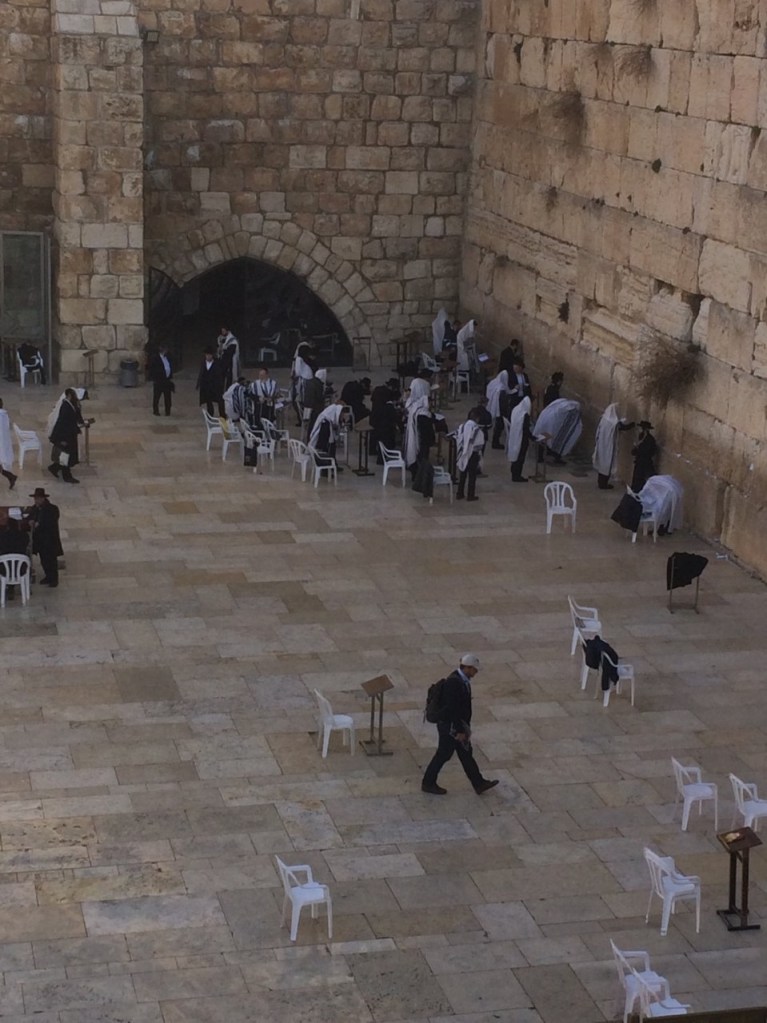
Most of the Temple was destroyed in 70CE, but a large part of the retaining wall, built by Herod to protect the temple still remains. A section of this retaining wall has been set apart and is known as The Western Wall. Jews and people of other faith traditions come to this wall and pray. Some tuck small notes in the crevices of the wall. I did not know when we visited the wall, but out of respect, people back away from the wall instead of turning their back to it when departing.
In Jesus’ time, people approaching the temple needed to stop at several places as part of their pilgrimage: they needed to change their money into temple currency; they needed to pay their temple tax, and they needed to purchase a sacrifice, anything from a small pigeon to a lamb, ram or bull.
The outline of the rooms where the sellers sat still exist. We had fun taking this photo.

Water was precious and scarce in Jerusalem. 2 Two springs existed which supplied all the water for the city. It entered through the “water gate” and was held in several pools (Mamilla Pool, Hezekiah’s Pool, the Pool of Bethesda, Solomon’s Pools, and the Pool of Siloam.)
The city was built with fortification walls, and they still exist. Gates, or archways in the wall are named, and you need to know which gate to take to access the part of the city you need to visit.
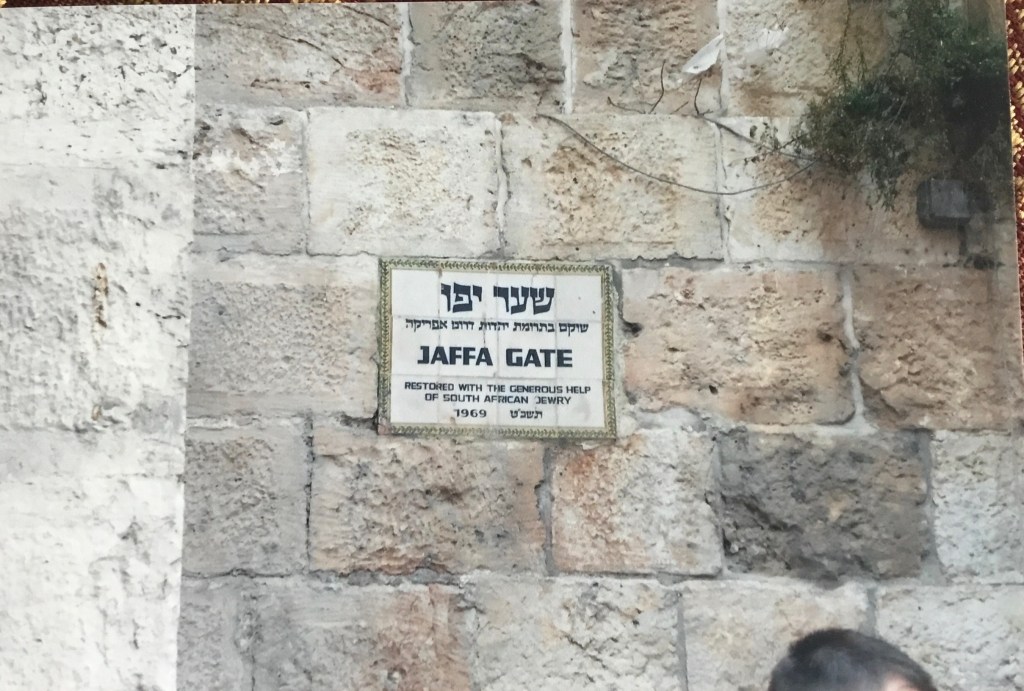
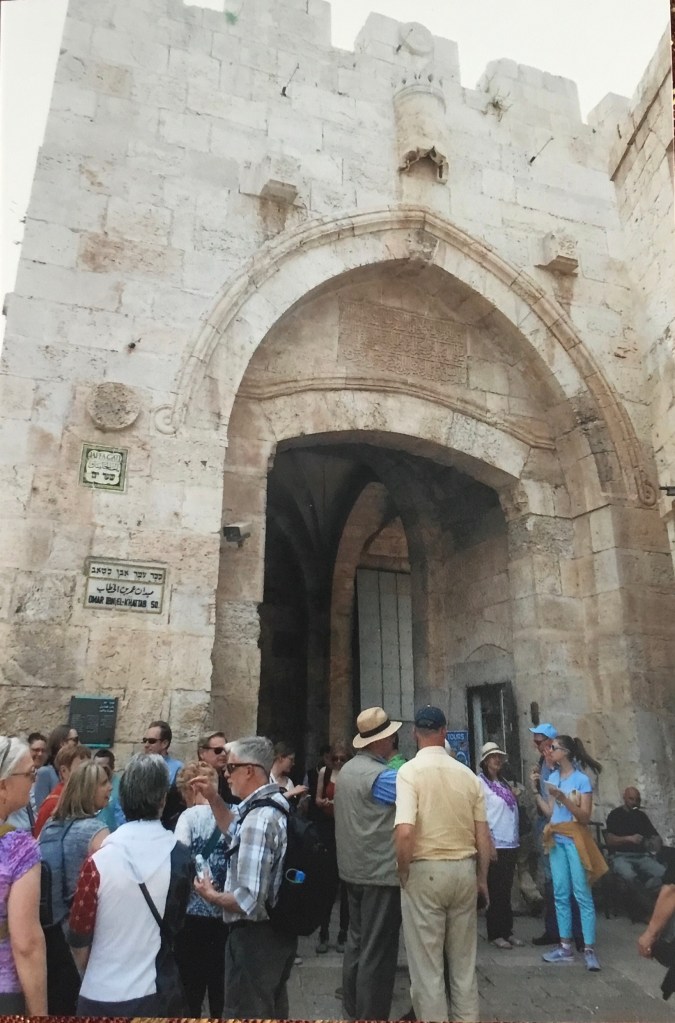
The city within the walls is a winding series of hallways lined with shops and merchants, and open spaces and winding streets. Sounds, aromas and sights are a feast for the senses, full of colour and busy-ness. And in the midst of all the hustle, it is common to see the men gathered in clusters, smoking and chatting, and conducting business. Today, and in Jesus time, the city was alive. As tourists we found it to be an exciting place. One of the gates was near a bakery cart where we purchased fresh bread every day for communion.

The name “Jerusalem” means Place of peace, (think of the word Shalom- Hebrew – , and Salam – Arabic – both which mean peace) and visitors looking for the presence of God can certainly feel it in many of the sacred locations. The city is home to 3 Abrahamic Faiths – Muslim, Christian and Jewish. As far being a place of peace, a bit more work needs to be done in that direction. We hold fast to the vision outlined in the book of Revelations chapter 21: “and I saw a new heaven and a new earth; …and I heard a loud voice saying: “see the home of God is among mortals… and he will wipe away every tear from their eyes…” The writer is describing the way things can be when God makes all things new.

This is the Lutheran Church in Jerusalem. The picture below is on the Temple Mount with the easily distinguished The Al-Aqsa Mosque. The tower of the Lutheran church is visible in the background.

This is the hope we cling to as we journey through Lent, seeking peace; seeking relationship with others and with God.
Blessings to you on this journey.
Prayer: God of grace and glory, guide us in your path to all things new. Open our hearts to receive the stranger, and to enjoy fellowship together. In your most Holy name we pray. Amen

 finding Grace in Surprising Ways
Thank you.
LikeLiked by 1 person
Thanks Dorothy and Bev, I’m happy to have company on the journey 😊
LikeLike